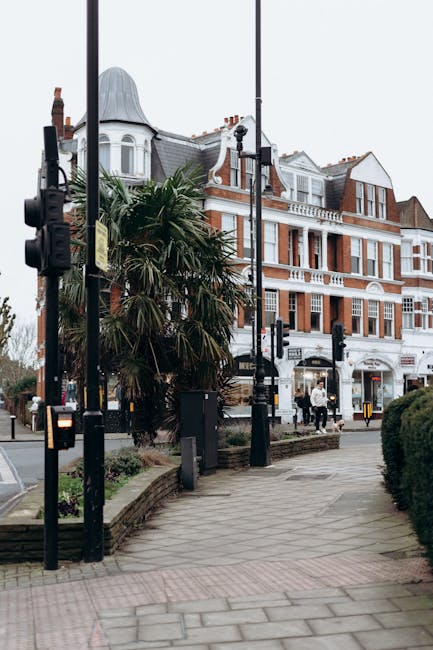
SW12 Bedford Hill Flat Removals with Small Lifts: A Practical Guide for Smooth, Low-Stress Moves
If you are planning SW12 Bedford Hill flat removals with small lifts, you are probably already picturing the awkward bits: tight stairwells, a lift that barely fits two people, and furniture that looked sensible in the shop but suddenly feels enormous in a South London hallway. To be fair, that is exactly where good planning makes the difference. A flat move in Bedford Hill is rarely just "load the van and go"; it is about timing, access, careful packing, and knowing how to work with the building rather than against it.
This guide breaks the process down in plain English. You will find practical steps, common mistakes, realistic expectations, and a few local-minded tips to help the move feel controlled instead of chaotic. If you are comparing moving support, it also helps to know how a specialist flat removals service fits around small lifts, narrow corridors, and apartment life in SW12.
Let's get into the details.
- Why SW12 Bedford Hill flat removals with small lifts Matters
- How SW12 Bedford Hill flat removals with small lifts Works
- Key Benefits and Practical Advantages
- Who This Is For and When It Makes Sense
- Step-by-Step Guidance
- Expert Tips for Better Results
- Common Mistakes to Avoid
- Tools, Resources and Recommendations
- Law, Compliance, Standards, or Best Practice
- Options, Methods, or Comparison Table
- Case Study or Real-World Example
- Practical Checklist
- Conclusion
- Frequently Asked Questions
Why SW12 Bedford Hill flat removals with small lifts Matters
Bedford Hill sits in a part of London where flat living is common, building access varies wildly, and "lift available" does not always mean "easy move." Small lifts can be perfectly manageable for people, but they often create a bottleneck for removals. That matters because most moving damage happens not on the road, but at the point where bulky items meet awkward access.
Think about a fridge, a sofa, a mattress, or a tall wardrobe trying to angle through a lift that was designed for daily use, not moving day. Suddenly you are dealing with measurements, turning space, load limits, corridor width, and the patience of neighbours who just want to get to work. This is why Bedford Hill flat removals need more than enthusiasm. They need method.
There is also a time factor. Small lifts can slow everything down, especially if the building has only one lift and other residents are using it too. In some blocks, a move that seems straightforward on paper becomes a long morning of careful waiting, lifting, and repositioning. If you plan for that early, you are much less likely to feel rushed.
And in London, rushing is usually where the wheels come off. Literally and figuratively.
A well-organised move also protects the building itself. Paintwork, lift panels, floor edges, and shared hallways are easy to scuff if the team has not planned the route. That is one reason many people pair apartment moves with wider removal services rather than treating it as a casual van job.
How SW12 Bedford Hill flat removals with small lifts Works
At a practical level, the move works by breaking the job into smaller, safer stages. The team looks at the access route, the lift size, the floor level, the amount of furniture, and how quickly items can be carried in and out. It is not glamorous, but it is the part that saves time and headaches.
A good flat removal with a small lift usually starts before moving day. You confirm what is being moved, note any oversized items, and mention anything awkward: mirror wardrobes, glass tables, bikes, plants, or heavy boxes of books. Yes, books. A few harmless-looking boxes of books can feel like they were packed by someone training for a strongman competition.
On the day, the crew will often:
- protect furniture and fragile items before loading
- check the lift dimensions and route from flat to vehicle
- move larger items first if the lift allows it
- use a combination of lift access and stairs where needed
- load the van in a way that keeps weight balanced and items stable
That last point matters more than people realise. A move in a compact block is not only about getting items down; it is about sequencing. If the sofa is the wrong item to move first, you may block access for everything else. Small lift logistics reward the patient mover.
For many residents, a service such as man and van can be a sensible fit when the job is smaller, the access is tight, and the move does not require a large crew. For heavier or more complex apartments, a larger vehicle such as a moving truck may be the better choice, especially if you are shifting multiple rooms at once.
Key Benefits and Practical Advantages
The biggest benefit of planning for a small-lift flat move is simple: fewer surprises. Once you know the lift is limited, you can organise the move around that reality instead of pretending it will behave like a freight lift in a warehouse.
Here are the main advantages:
- Less damage risk: careful handling reduces knocks to furniture, walls, and the lift interior.
- Better time control: measured planning helps avoid the stop-start chaos that slows moves down.
- Less stress: knowing the route and the plan makes the day feel calmer, even if there is a bit of waiting around.
- Safer lifting: items are carried in manageable stages rather than forced through tight spaces.
- Cleaner organisation: boxes and furniture are easier to place in the new flat when the move is structured.
There is also a practical financial benefit. A move that is well scoped is less likely to need last-minute extras, second trips, or emergency storage because something would not fit. A clear plan can make a quote more accurate too, which is why people often check pricing and quotes early in the process.
One small but important advantage: better neighbour relations. If a small lift is used efficiently, residents are less likely to get frustrated by long delays. That sounds minor, but in a shared building it is not. A calm move is usually a kinder move.
Who This Is For and When It Makes Sense
This kind of move is especially relevant for people living in SW12 Bedford Hill who are in purpose-built flats, converted properties, mansion blocks, or smaller apartment buildings where lift access is limited. If that sounds like your building, you are in the right place.
It makes sense if you are:
- moving from a one- or two-bedroom flat
- living in a building with a compact passenger lift
- moving furniture that is bulky but not impossible to dismantle
- trying to avoid damage to communal areas
- working to a fixed move-out time
- moving solo, as a couple, or with a small family
It is also a strong fit for students, renters, and younger professionals who do not need a huge lorry but do need careful access planning. If you are in temporary accommodation or waiting on a completion chain, you may also appreciate the flexibility of same-day removals or short-notice support, although availability always depends on scheduling.
Not every move needs a full-scale team. Sometimes a compact, focused approach is exactly the right call. Other times, especially with stair-heavy buildings or awkward items, the smarter decision is to ask for more help before the day turns into a puzzle you did not want.
Step-by-Step Guidance
Here is a clear way to organise a Bedford Hill flat move when the lift is small.
- Measure the awkward things first. Check the height, width, and depth of the lift, then compare it with your largest items. Sofa arms, headboards, wardrobe doors, and fridge-freezers are the usual suspects.
- List what can be dismantled. Beds, tables, and some wardrobes are much easier to move in parts. If something can be reduced in size safely, do it.
- Sort and label boxes. Keep fragile items separate and mark anything heavy. A box labelled "books" should never be a mystery box. Trust me on that one.
- Confirm building access. Ask about lift booking rules, loading bays, parking restrictions, and any moving-day permissions needed by the block.
- Plan the order of loading. Put the items that are hardest to move at the centre of the plan. Do not leave them until you are tired.
- Create a clear path in the flat. Clear hallways, remove loose rugs, and protect floors where possible.
- Pack a first-night box. Include bedding, chargers, toiletries, tea bags, medication, and a snack. The kettle matters more than people admit.
- Do a final walk-through. Check cupboards, meters, loft storage, under beds, and behind doors. You would be amazed how often a charger or passport gets left in the wrong room.
If you are packing yourself, it can help to use a structured packing and boxes approach rather than grabbing any old box from a corner shop. Strong cartons, repeatable labels, and sensible box sizes make flat removals much easier. If time is tight, some people choose packing and unpacking services so they can focus on the building access and the moving-day logistics.
And if the move includes items you cannot take straight away, a short-term storage option can be a very practical pressure valve. Not exciting, but extremely useful.
Expert Tips for Better Results
A few field-tested tips can make a big difference in a small-lift flat move. Nothing fancy. Just the sort of advice that saves a moving day from becoming long and a bit sweaty.
- Use smaller box sizes for heavy items. Large boxes are fine for cushions and bedding, not so fine for books or crockery.
- Leave yourself a corridor margin. In tight buildings, a few extra centimetres of movement space can be the difference between smooth and stuck.
- Keep screws and fittings in labelled bags. Tape them to the item they belong to, or keep them in one clearly marked envelope.
- Move the awkward items early. Mirrors, desks, and bed frames should not be an afterthought.
- Protect shared surfaces. Door frames, corners, and lift interiors are vulnerable, and in blocks with high foot traffic, small scrapes are easy to cause.
Another small observation: don't overload one person with decision-making on the day. Having one person "in charge" of directions and one person on the packing/lifting side keeps things calmer. Too many instructions at once can turn a simple route into a family committee meeting, and nobody wants that at 8:30 in the morning.
If you are moving a heavier item like a piano or a large upright, it is worth checking whether a dedicated piano removals service is more appropriate. Not every specialist item can be handled in the same way, especially when lift space is tight.
Common Mistakes to Avoid
Most removal problems in small-lift flats come from assumptions. The lift looks fine, the move seems small, and then the first wardrobe arrives and everybody learns a lesson.
Common mistakes include:
- Not measuring the lift properly. People often estimate by eye, which is rarely enough.
- Ignoring corridor turns. A box may fit in the lift but fail at the bend outside it.
- Leaving packing until the last minute. That is how fragile items get bundled badly.
- Forgetting building rules. Some blocks require lift booking or prior notice.
- Underestimating load weight. A small box of books can be worse than a bulky cushion.
- Trying to move everything in one pass. Sometimes fewer items per trip saves more time overall.
There is also the classic mistake of not checking insurance and responsibility. If an item is damaged, or a wall gets marked, you want to know who is covering what. That is why many people read the fine print on insurance and safety before confirming the booking. It is not thrilling reading, but it is the sort of thing you are glad about later.
And a gentle one: do not assume your friend with a van is automatically ready for a cramped apartment move. Sometimes yes. Sometimes not. There is a difference between helpful and properly equipped.
Tools, Resources and Recommendations
You do not need a warehouse full of gear to handle a flat move well, but the right basics matter. A small kit can prevent a lot of wear and tear.
| Item | Why it helps | Best for |
|---|---|---|
| Strong double-walled boxes | Hold weight better and reduce breakage | Books, kitchenware, mixed household items |
| Furniture blankets | Protect corners and surfaces from scuffs | Tables, wardrobes, appliances |
| Stretch wrap | Keeps drawers shut and prevents loose parts | Cabinets, bedside units, shelving |
| Tape and labels | Makes identification and unloading far easier | All boxes and dismantled fittings |
| Measuring tape | Confirms whether items can safely fit through access points | Lift, hallway, and furniture checks |
If you need a smaller vehicle for a compact flat move, a removal van can be a practical fit. For slightly larger jobs, or if your move involves multiple bulky items and longer loading time, man with van and similar options may suit. The real point is not the label; it is whether the service matches the access.
For people wanting broader support, removal companies can be compared by how well they understand flat access, lift constraints, and local timing. That is more useful than comparing based on price alone, because the cheapest quote can turn expensive if access is badly planned.
Law, Compliance, Standards, or Best Practice
For a flat removal in a London building, the most relevant point is not a long list of legal rules, but sensible compliance and common-sense best practice. Buildings often have their own moving procedures, and those should be respected. If a lift booking is required, book it. If the block asks for padding or advance notice, follow the request. Simple enough, really.
From a moving perspective, the essentials are:
- Safe manual handling: lifting should be planned to reduce strain and avoid rushed carrying.
- Care for shared property: walls, doors, stairs, and lifts should be protected where possible.
- Clear communication: the moving team and the resident should agree on access details before arrival.
- Insurance awareness: everyone should know what is covered in the event of accidental damage.
It is also sensible to check a provider's approach to health and safety policy and their broader terms and conditions. That does not mean expecting legal drama. It just means moving with open eyes.
On sustainability, many residents also like to reduce waste during a move. If you are getting rid of unwanted items, a provider's recycling and sustainability approach can matter, particularly when furniture still has some life left in it. Better to reuse or recycle responsibly than dump things in a hurry.
Options, Methods, or Comparison Table
Not every Bedford Hill flat move with a small lift needs the same setup. The right method depends on volume, access, and how much help you want on the day.
| Move type | Best for | Pros | Watch-outs |
|---|---|---|---|
| Small van move | Studios, one-bed flats, light loads | Flexible, efficient, usually quicker to load | Can require multiple trips if load is larger than expected |
| Man and van | Compact flat moves with awkward access | Good for small lifts and hands-on loading | May not suit very large inventories |
| Full removal team | Two-bed flats, heavy furniture, tight timelines | More lifting support and better coordination | Usually more expensive than a lighter option |
| Hybrid approach | Mixed-size moves or partial packing | Flexible and adaptable to building constraints | Needs clear planning to avoid confusion |
There is no single "best" option for every flat. If you are moving a small amount and the lift is cooperative, a lighter setup can be ideal. If the lift is tiny, the furniture is heavy, or you have to work around a strict building timetable, a fuller service may save more time than it costs. Bit annoying to hear, perhaps, but true.
Case Study or Real-World Example
Here is a realistic example from the kind of move people often face in SW12.
A renter in a Bedford Hill apartment block is leaving a second-floor flat with a small passenger lift, one sofa, a bed, a dining table, two chairs, a chest of drawers, and around twenty boxes. At first glance, it looks manageable. But the sofa is wide, the bed frame comes apart in awkward sections, and the lift is tight enough that one person needs to stand back each time it is loaded.
Instead of trying to force everything through in one go, the move is handled in stages:
- the bed is dismantled first
- the sofa is wrapped and measured before moving
- boxes are stacked by weight, not just by room
- the lift is used for smaller and medium items
- the heaviest pieces are carried with extra care, one at a time
The result is not magic. There is still effort, and there is still a bit of waiting around. But the move stays controlled, the building is kept tidy, and the new flat can be set up without damaged corners or missing fittings. That is what a good flat removal should feel like: organised, not dramatic.
For someone in that position, support from home moves or house removals may be too broad if the focus is just the apartment. But for a combined move with more household volume, those options can be worth exploring. It depends on the scale, as ever.
Practical Checklist
Use this checklist in the days before your move. It is simple, but it covers the things people most often forget.
- Measure the lift, stair turns, and any tight hallway points
- Measure your largest furniture items
- Confirm parking, loading, and building access rules
- Book lift access if the building requires it
- Label all boxes clearly
- Pack valuables, documents, and essentials separately
- Dismantle furniture where safe and practical
- Protect floors, corners, and fragile surfaces
- Keep a first-night bag handy
- Tell the removal team about anything unusually heavy or fragile
- Check whether unwanted items should be moved, stored, or removed separately
- Do one final sweep of cupboards, shelves, and behind doors
If you need to clear out furniture before or after the move, a dedicated furniture removals or furniture pick up option can be helpful. It keeps the main move cleaner and often saves a bit of time, which is never a bad thing.
Get a free quote today and see how much you can save.
Conclusion
SW12 Bedford Hill flat removals with small lifts are all about planning for reality, not hoping the lift will behave like a miracle machine. Measure carefully, pack thoughtfully, choose the right support, and keep the route clear. Once those basics are in place, the whole move becomes much easier to manage.
What really helps, in the end, is treating the flat move as a sequence of small decisions rather than one giant stressful event. That mindset alone can take the edge off the day. And once the last box is in, the kettle's on, and the old flat is behind you, the relief is real. A good move doesn't need to be flashy. It just needs to go well.
When you are ready, choose the approach that fits your building, your timing, and your furniture, and you will give yourself a much calmer start in your new place.
Frequently Asked Questions
Can a small lift handle a normal flat removal?
Sometimes yes, sometimes no. It depends on the lift dimensions, the size of your furniture, and whether items can be dismantled safely. A compact move with mostly boxes and smaller furniture is usually straightforward, while large sofas or wardrobes need more planning.
How do I know if my sofa will fit in the lift?
Measure the sofa at its widest point and compare it with the lift's internal width, depth, and door opening. Don't forget to consider the turning space outside the lift too. A sofa can look manageable until you try to angle it through a corner.
What should I do if my building only has one small lift?
Book access early if possible, warn residents where needed, and keep the moving process well organised. One lift means patience matters. Plan the loading order carefully so the team is not wasting time moving items back and forth.
Is a man and van service enough for a Bedford Hill flat move?
For smaller flats, it often is. If you have a modest amount of furniture and a manageable lift situation, a man with van style service can be a sensible choice. Larger loads or heavier items may need more support.
Should I dismantle my bed before moving day?
Yes, if it can be done safely. Bed frames, shelving, and some wardrobes are easier to move in parts. Keep screws and fittings together in a labelled bag so reassembly is not a guessing game later.
Do I need to tell the building management about the move?
In many apartment blocks, yes. Some buildings want advance notice, lift booking, or protection for communal areas. It is always best to check early rather than arrive and discover a rule nobody mentioned.
What items are most likely to cause problems with a small lift?
Wide sofas, mattresses, wardrobes, tall mirrors, and large appliances are the common troublemakers. Heavy boxes of books are also sneakily awkward. They look innocent, then suddenly they are not.
Can I use storage if not everything fits on the day?
Yes, and for some moves it is the smartest option. If certain items are too bulky or if your new flat is not ready for everything at once, storage can make the whole process much more manageable.
What is the best way to protect the lift and hallway?
Use blankets, careful handling, and a clear moving route. Good teams protect corners and keep items under control rather than dragging them through shared areas. It sounds basic, but basic is what prevents damage.
How far in advance should I arrange my move?
If possible, arrange it as early as you can, especially if you need a specific time slot or lift access. Short-notice moves can still work, but the more lead time you have, the easier it is to plan around Bedford Hill building access.
What if I only need help moving a few items?
That can still be worth booking. Small moves often benefit from specialist handling, particularly when a lift is tight or the stairs are awkward. Sometimes just having the right help for the heavy bits makes the whole job feel manageable.
How do I compare removal companies for a flat with a small lift?
Look at how clearly they discuss access, what size vehicle they suggest, whether they ask the right questions, and how they handle planning. A company that thinks about the lift, not just the boxes, is usually the more useful choice.